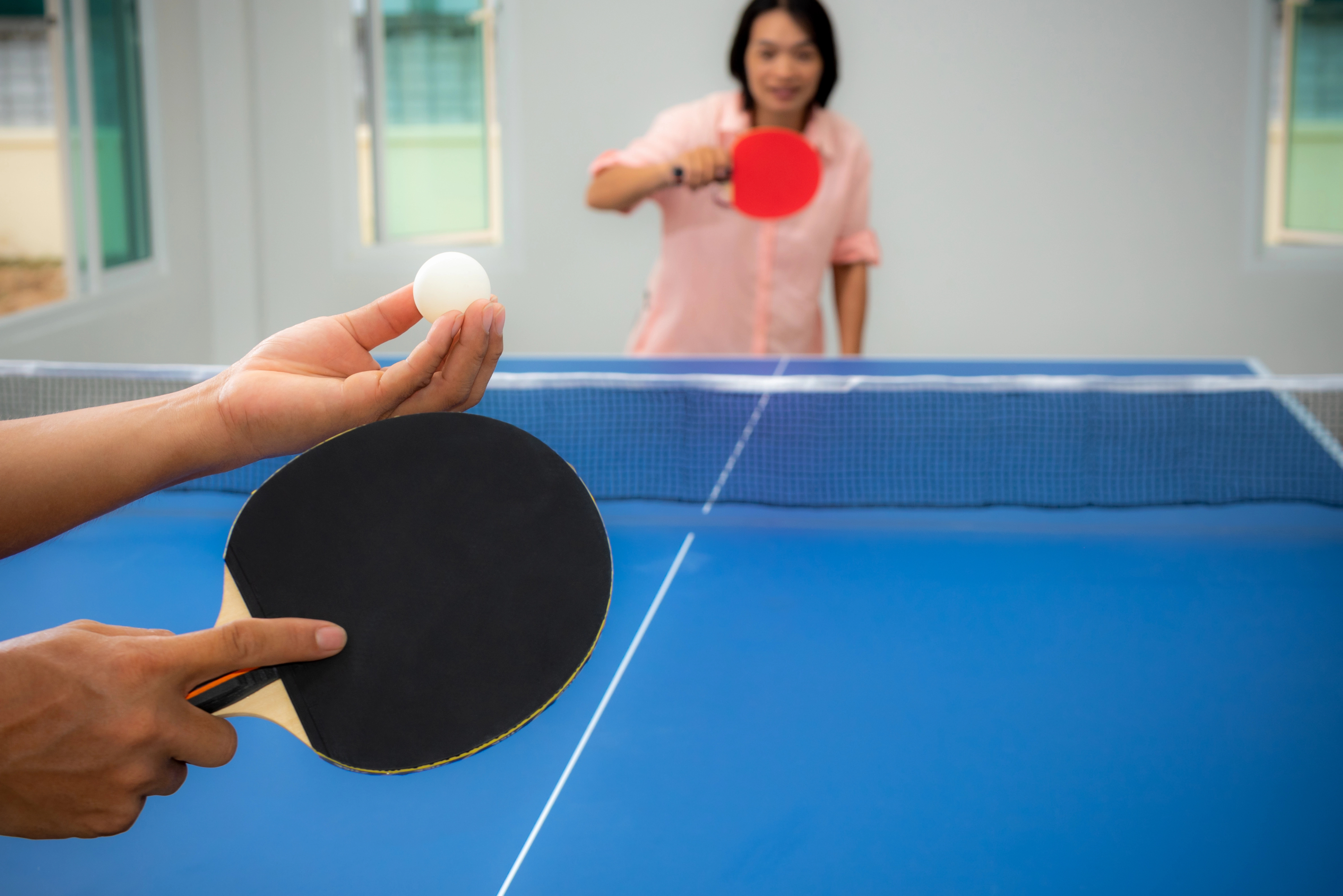
Serving is a fundamental skill that can dictate the flow of a table tennis match. Beginners often struggle with mastering spin and placement but learning the right serves can give you an early advantage. This guide will cover the most effective and easy-to-learn serves for beginners, including key techniques and common mistakes to avoid.
Why Focus on Serving Skills as a Beginner?
The significance of serve in table tennis strategy
The serve is the only stroke in table tennis where you have full control over the ball’s spin, speed, and placement without interference from your opponent. As a beginner, focusing on your serving skills allows you to start the point on your terms, enabling you to set up offensive or defensive plays effectively.
How a good serve sets up your offensive or defensive play
A well-executed serve can put your opponent out of position by varying placement and spin. For example, a short backspin serve can force a weak return, opening the opportunity for a strong attack. Conversely, a well-placed sidespin serve can disrupt your opponent’s rhythm and prepare you for a defensive block or counter.
Common beginner serve challenges and how to overcome them
- Difficulty generating consistent spin: Focus on mastering the basics of racket angle and dwell time.
- Poor ball toss and timing: Practice a vertical ball toss of at least 16 cm as per official serve rules.
- Predictable serves: Learn a variety of simple serves to keep your opponent guessing.
Understanding Basic Serve Elements
Grip and stance for stable serve execution
Use the Shakehand grip for versatility; hold your racket firmly but relaxed. Stand with feet shoulder-width apart, knees slightly bent, and weight balanced. This stance supports quick adjustments after the serve.
Dwell time and racket throw angle explained
Dwell time is the amount of time the ball stays in contact with the racket during the serve. Increasing dwell time by using a softer racket angle and controlled motion can help impart more spin, especially for backspin and sidespin serves. Beginners should aim for smooth racket acceleration and consistent ball contact to maximize spin effect.
How to generate different types of spin with beginner-friendly techniques
- Backspin: Brush the ball in a downward motion with the racket face slightly open.
- Sidespin: Swing the racket sideways while contacting the ball to create lateral rotation.
- Topspin (fast serves): Brush upward quickly with a closed racket angle to generate forward spin and speed.
Top 5 Best Table Tennis Serves for Beginners
Backspin Serve: Benefits and how to perform it
This serve slows the ball down and makes it float low on the opponent’s side, forcing a difficult return. Slightly open your racket and brush downwards on the ball with moderate speed. Aim to land the ball just over the net on the opponent’s service box.
Sidespin Serve: Basics and when to use it
Sidespin causes the ball to curve and bounce unpredictably, disrupting opponent timing. Use a pendulum motion with your wrist flicking sideways upon contact. Combine with short placement to target the opponent’s forehand or backhand.
Short Pendulum Serve: Technique and tactical advantages
The short pendulum serve uses a pendulum racket swing to impart strong sidespin combined with backspin, landing the ball short near the net. Its low trajectory and spin make it hard for the opponent to attack cleanly, ideal for controlling the short game.
Fast Topspin Serve: Building confidence and timing
Once comfortable, use a closed racket face and swing upward briskly to create topspin with speed. This serve pushes the opponent away from the table and can set up aggressive third-ball attacks. Timing and racket angle control are key. For more on this, see Mastering the Serve and Third Ball Strategy in Table Tennis.
No-Spin Serve: Using deception effectively
Deceptive serves have little to no spin but mimic spin serves in appearance, confusing opponents. To execute, strike the ball cleanly with a flat racket face and minimal brushing. Vary your placement to increase unpredictability.
Step-by-Step Guide to Executing Each Serve
Preparation: ball toss and blade positioning
Hold the ball in your open palm and toss it vertically at least 16 cm without spin. Position your racket slightly above or to the side of the ball depending on the desired spin. Keep your stance balanced.
Contact point and follow-through
Hit the ball at the peak of the toss with a controlled wrist and forearm motion. Follow through smoothly in the direction corresponding to the intended spin—downward for backspin, sideways for sidespin, upward for topspin.
Placement tips: varying serve length and angles for greater effectiveness
- Short serves land near the net to force weak returns.
- Long serves push opponents back, opening court angles.
- Mix serves to different corners: wide forehand, body, or backhand zones to keep your opponent guessing.
Serve Placement Strategies for Beginners
Targeting the opponent’s backhand and forehand weaknesses
Identify if your opponent struggles with their forehand or backhand and direct serves accordingly. Beginners can alternate serves to each wing to develop placement skills and gather tactical experience.
Short vs long serves: when and how to use them
Use short serves to disrupt timing and build pressure early. Long serves can surprise and induce errors if placed deep near the baseline. Mixing these lengths adds tactical variety.
Mixing spin and placement to confuse your opponent
Combine different spins with varying serve lengths and angles. For example, a short backspin serve followed by a fast topspin long serve keeps your opponent uncertain and reactive rather than proactive.
Common Serve Mistakes Beginners Make and How to Fix Them
Inconsistent ball toss and timing errors
Practice tossing the ball vertically with a steady hand and timing the racket swing to meet the ball at the apex of the toss. Use drills focusing solely on toss and contact coordination. For solo practice methods, see Effective Table Tennis Training Without a Partner.
Lack of spin variety leading to predictable serves
Rotate through your mastered spins regularly during play to avoid becoming predictable. Video analysis or practice with a partner can help track serve diversity.
Overhitting or serving too long
Control your swing power to avoid pushing the ball beyond the opponent’s baseline. Target a controlled contact point and moderate follow-through during learning.
Equipment Tips to Enhance Your Serving
Choosing the right blade and rubber type for beginners
Opt for blades made of wood with balanced control and speed. Rubbers with moderate sponge hardness enhance spin generation without overwhelming control. For detailed guidance, see our beginner racket guide.
How sponge hardness affects serve spin and control
Softer sponges increase dwell time, allowing more spin on serves, especially backspin and sidespin. Harder sponges provide speed but require precision timing.
Importance of racket angle and grip pressure
A stable grip with relaxed pressure on the handle allows better racket angle adjustments for spin variety. Experiment with wrist angles to feel different spins while maintaining control.
Practicing Serves: Drills and Training Tips
Solo serve practice routines to improve consistency
- Use repetitive toss-and-serve drills focusing on ball toss height and contact quality.
- Vary spin and placement intentionally to build muscle memory.
Partner drills focusing on serve-receive exchanges
Practice serving sequences with a partner who returns with feedback on spin and placement accuracy. This replicates match conditions and prepares you for real-game variations.
Using video analysis to refine serve technique
Record your serves to analyze toss trajectory, racket angle, dwell time, and ball placement. Identify inconsistencies or faults and adjust technique accordingly.
Conclusion
- Mastering a few key serves can significantly improve your match performance as a beginner.
- Consistency, spin variation, and strategic placement are the pillars of an effective serve.
- Regular practice using targeted drills will build confidence and technical skill.
- Proper equipment selection complements your technique and enhances serve quality.