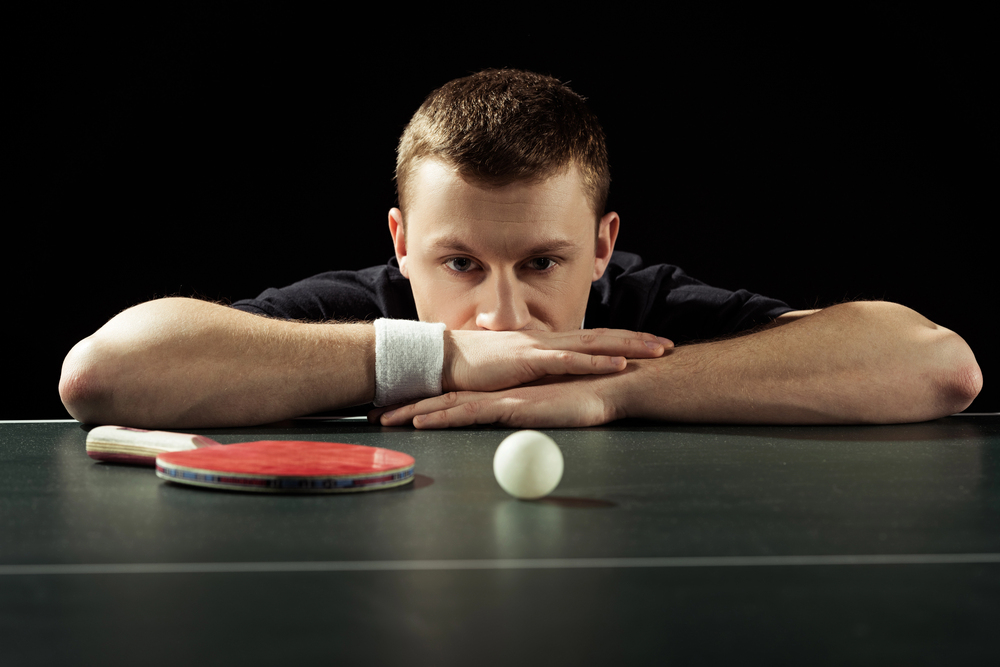
In competitive table tennis, psychological readiness is as critical as technical skills like footwork, topspin, and backhand loop execution. Table tennis match psychology governs how players handle pressure, maintain focus, and recover from setbacks. Understanding this mental aspect complements the physical elements—blade composition, sponge hardness, and tactical serve receive—helping players perform consistently and confidently under match conditions.
Focus, confidence, and stress management directly influence match outcomes. With rapid rallies and minimal dwell time, players must develop mental resilience to stay alert and execute strategies effectively. This article delves into key psychological components shaping competitive success in table tennis.
The Role of Mental Toughness in Table Tennis
Defining mental toughness specific to table tennis
Mental toughness in table tennis means staying calm and focused during fast-paced exchanges, handling sudden momentum shifts, and sustaining confidence when executing complex shots like the backhand loop or deceptive serves. It involves the ability to manage distractions, maintain positive self-talk, and adapt tactically amid pressure, all while coordinating fine footwork and timing with the ball’s spin characteristics.
Common mental challenges during matches
- Dealing with unexpected spin variations affecting dwell time on the blade and resulting shot trajectory.
- Controlling nerves before or during crucial points, particularly when returning aggressive short game serves with tensor rubber rackets.
- Recovering focus after missed shots or points lost from unforced errors or opponent momentum surges.
Pre-Match Mental Preparation Techniques
Visualization of shots and match scenarios
Visualization helps players mentally rehearse shot execution and anticipated rallies involving topspin loops or fast backhand counters. By picturing themselves performing specific strokes with control and timing, players can reduce anxiety and increase readiness. Effective visualization also includes imagined responses to opponents’ tactics, like adjusting serve receive patterns against aggressive short game play.
Developing a consistent pre-serve and pre-return routine
Routine anchors the mind before key actions. For example, aligning stance, checking blade angle influenced by sponge hardness, or taking a fixed breath before each serve or receive creates mental consistency. This predictability reduces cognitive load and supports reliable footwork synchronization during the point.
Managing nerves through breathing and focus exercises
Controlled breathing resets the nervous system during tense moments. Techniques such as mindful deep breaths or focusing on the rhythm of footwork between points help regulate heart rate. These strategies maintain mental clarity, allowing clearer judgment of spin and timing, essential for exploiting opponent weaknesses.
Maintaining Focus and Concentration During Play
Strategies to reduce distractions and maintain rally engagement
- Limit attention on the scoreboard or crowd distractions by focusing intently on the ball flight and opponent’s paddle angle.
- Use a fixed gaze point where the ball contacts the racket, improving anticipation of dwell time and spin.
- Segregate each rally as a discrete event to prevent negative carry-over from previous points.
Using positive self-talk to sustain confidence
Verbal affirmations like “stay aggressive” or “trust your topspin” reinforce a confident mindset. Positive self-talk counters self-doubt arising from difficult rallies, especially when under pressure to perform complex strokes like a fast topspin or accurately timed backhand loop.
The role of dwell time awareness in staying mentally alert
Being conscious of the ball’s dwell time on the paddle helps players anticipate the next move quickly. Short dwell times with tensor rubber require rapid footwork and timely stroke execution. Awareness of this micro-window enhances concentration, improving reaction speed and shot precision.
Momentum and Emotional Control in Matches
Recognizing momentum shifts and how to respond
Momentum can shift quickly in table tennis, often linked to aggressive short game plays or sudden changes in spin variety. Recognizing signs, such as opponent gaining confidence or faster ball placement, allows players to adapt tactically or slow the pace with deep serves and controlled loops to regain control.
Techniques to regain composure after losing points
- Pause briefly between points to take deep breaths and reset focus.
- Refocus on blade feel and footwork rhythm to reconnect with technical execution.
- Use positive cues like “next point, new chance” to move past frustration.
Avoiding tilt and frustration when facing aggressive opponents
Aggressive players often use quick shot sequences and spin variation to pressure mental resilience. Staying emotionally detached from the scoreline and maintaining a tactical mindset—focusing on serve receive form and controlling rally timing—helps prevent tilt and preserve strategic clarity.
Psychological Approaches to Tactical Decision Making
Adapting shots and serve receive patterns based on opponent’s psychology
Effective players observe opponents’ reactions to varying serves or spins to identify mental vulnerabilities. For instance, mixing short serves with differing sponge hardness cause hesitation, allowing easier point endings. Adjusting serve receive placement can exploit opponent discomfort or impatience.
Balancing risk and consistency under pressure
Psychological awareness helps decide when to employ riskier attacks like fast topspin loops or backhand loops and when to focus on consistency through controlled blocks and counters. Prioritizing higher consistency in tight score situations reduces unforced errors from rushed strokes.
Reading opponent’s body language and mental state
Subtle cues like tight grip on the blade, stiff footwork, or slow reaction times indicate mental fatigue or frustration. Recognizing these signs allows players to increase pressure tactically or exploit weak psychological moments.
Building Confidence Through Mental Conditioning
Setting realistic performance goals for improvement
Goals focused on process-based outcomes—such as improving footwork positioning or mastering blade control during serve receive—build attainable milestones. This fosters steady progress and reinforces confidence beyond mere point outcomes.
Reflecting on past matches to develop a growth mindset
Post-match reflection on tactical choices, handling of momentum, and emotional control encourages learning. Viewing setbacks as opportunities to refine psychological resilience and technique supports ongoing mental growth.
Using match play experience to strengthen psychological resilience
Regular competition exposes players to diverse pressures, from aggressive short games to spin-heavy rallies affecting dwell time. This experience develops adaptability and trust in both technical skills and mental strategies, reinforcing confidence during crucial phases.
Common Psychological Mistakes and How to Avoid Them
Overthinking technical execution mid-rally
Focusing excessively on technical details like blade angle or sponge hardness during hectic rallies disrupts fluid play. Trusting ingrained footwork and stroke mechanics allows the mind to stay present and responsive.
Allowing external factors to disrupt focus
Noise, opponent antics, or crowd reactions can fracture concentration. Techniques like fixed gaze points and mental routines help fend off these distractions.
Underestimating the importance of mental rest
Continuous mental strain leads to decreased alertness and poorer decision-making. Incorporating short mental breaks during longer matches improves sustained focus and emotional control.
Table tennis match psychology is a vital facet of competitive success. Effective mental toughness, pre-match preparation, focus maintenance, momentum control, tactical awareness, and confidence-building create a holistic performance approach. Integrating these psychological strategies alongside technical training like footwork refinement, spin judgment, and equipment familiarity enhances match resilience and elevates your overall game.