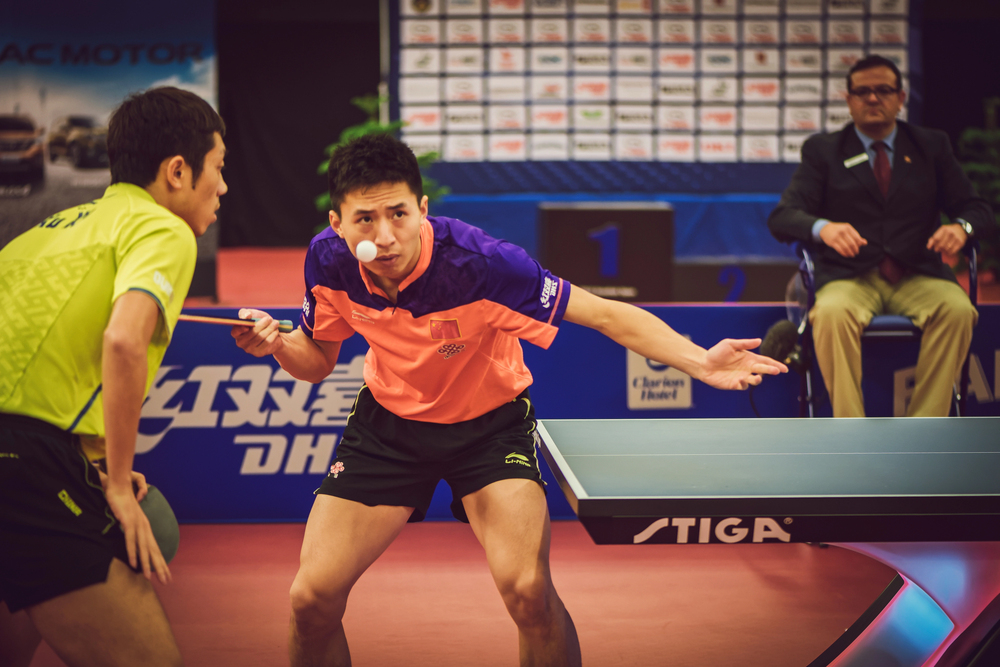
Table tennis doubles presents a fascinating variation from singles with unique gameplay dynamics and rule nuances. Unlike singles, doubles require coordinated teamwork, precise positioning, and strict adherence to specific serving and rotation regulations. Understanding the table tennis doubles rules is essential for players aiming to excel competitively and coaches looking to train effective doubles teams. This guide assumes familiarity with basic table tennis rules, focusing on doubles-specific intricacies that shape this exciting format.
Fundamental Differences Between Singles and Doubles in Table Tennis
Court dimensions and positioning for doubles matches
Doubles matches are played on the same-sized table as singles, but with a key difference: the doubles court is divided by a centerline reaching from the net to the end line, creating separate service boxes on each side. Serves must land diagonally across this centerline, making court positioning critical. Teams have fixed sides, and partners must coordinate to cover their half efficiently.
The positioning requires players to stay on their assigned side during service and at the beginning of rallies, impacting initial shot selection and footwork. Unlike singles, the available playing area for each player is restricted laterally, encouraging precise placement and teamwork.
Impact of doubles rules on gameplay strategy and shot selection
Doubles dynamics emphasize rotational movement and alternate hitting. Players often prioritize quick exchanges, sharp angles, and placement over sheer power. The need to alternate strokes between partners means planned shot sequences like setting up a partner with a backhand loop or executing a quick topspin near the net become strategic tools.
Effective footwork and anticipation are paramount to cover assigned zones swiftly. Teams commonly use formations and planned rotations to maintain optimal court coverage while minimizing false strokes.
Serving Rules and Order in Table Tennis Doubles
Correct serve rotation among players
Serving order in doubles follows a strict clockwise rotation among the four players. The serving team begins with one player serving, and the serve passes to the opposing team after two points, changing the server and receiver according to a predetermined sequence. This rotation ensures equitable opportunity and maintains rally rhythm.
For example, Player A serves to Player X, then Player X serves to Player B, followed by Player B serving to Player Y, and so forth. Deviating from this order results in a service fault or loss of point.
Legal serve placements and the server’s duty
Per International Table Tennis Federation (ITTF) guidelines, the serve in doubles must bounce once on the server’s right half of the table and then once on the receiver’s right half. The server must execute a visible and legal toss and strike that adheres to these placements to avoid faults.
This diagonal serve forces the receiver to anticipate placement and spin while respecting the central division, with precise control over dwell time and spin imparted through blade composition and rubber characteristics, such as tensor rubber.
Receiver’s position and responsibilities during the serve
The receiver must stand diagonally opposite the server and remain on their half of the table until the serve is made. Positioning outside of this designated service box during serve receive is a fault. Correct stance and readiness improve response to various spins such as topspin, backspin, or sidespin delivered strategically by the server.
Service Rotation and Rally Sequence in Doubles
How the serve passes between teams and partners
The serve alternates between teams every two points, with serving turning over in the order established at the match start. Within teams, partners alternate serving and receiving roles after each sequence, enforcing a fair sharing of responsibility.
Sequence of strokes: alternating hits between partners
A defining rule in doubles is that partners must alternate shots during a rally—Player A hits, then Player X must return, followed by Player B, then Player Y, and so forth. Failure to alternate results in a point awarded to the opponents. This rule demands synchronized timing and tactical shot selection to facilitate partner positioning and continuity.
Rules for switching serving team after points
Once the serving team reaches two points, service transfers to the opposing team, starting with the partner scheduled next in the rotation. This systematic exchange continues until the end of the game. Players must track service order carefully; errors cause loss of serve and points.
Positioning and Rotation During Play
Rules governing where players must stand during serves and rallies
At service, players must remain on their designated right or left halves of the doubles court. After the serve, players may move freely but must maintain alternating shot order. The rules forbid any partner from hitting two consecutive shots or obstructing the opponent’s view unfairly.
Partner switching rules and when position adjustments are allowed
Players can switch court sides only between points or games, never during a rally. However, tactical positioning, such as the planned use of forehand or backhand dominance, influences pre-serve stances. During rallies, quick positional changes are expected for coverage but must respect the alternating stroke rule.
Avoiding faults related to incorrect player positioning
Faults occur if partners hit consecutively, serve out of order, or stand incorrectly during serve or returns. Coaches emphasize practicing correct table tennis doubles team dynamics to reduce errors. Awareness of positioning rules helps maintain fluid match play and team synergy.
Scoring and Winning Criteria Specific to Doubles
Point allocation in doubles matches
Scoring in doubles matches follows the same system as singles—first to 11 points wins a game, with at least a two-point margin required. Points are awarded for faults, missed returns, or serves out of order. Teams accumulate points alternately serving and receiving according to rotation rules. For detailed scoring rules, see our Complete Guide to Table Tennis Scoring Rules.
How deuce and advantage situations are handled
When scores reach 10-10 (deuce), play continues until one team leads by two points. At this stage, serves alternate every point instead of every two points to increase competitive tension. Positioning and service rotation rules continue to apply strictly.
Match formats for doubles: best of 5 or 7 games
Doubles matches are commonly played as best of 5 or best of 7 games, decided by tournament or league rules. Consistency in understanding scoring and rotation is essential to avoid procedural misunderstandings during longer formats.
Common Doubles Faults and How to Avoid Them
Illegal serves and foot faults in doubles
Common faults include serves not landing diagonally in the prescribed boxes, foot faults where the server steps outside the baseline or into the court improperly, and serves with illegal ball concealment. Practicing serve mechanics emphasizing clear tosses and legal placements reduces these faults.
Failing to alternate strokes during a rally
One of the most frequent doubles errors is partners hitting consecutively rather than alternating shots. This violates ITTF regulations, immediately rewarding opponents a point. Drills focusing on timing, partner awareness, and shot anticipation mitigate this fault.
Positioning faults and incorrect service order
Errors in standing position, incorrect partner serving out of turn, or delivering serves out of rotation compromise team integrity and lead to penalties. Teams benefit from verbal cues and visual signals to maintain order during matches.
Etiquette and Best Practices for Doubles Play
Communication and teamwork strategies
Effective verbal and non-verbal communication between partners is crucial for executing rotations, tactical plays, and covering court spaces. Teams commonly use hand signals or brief calls to coordinate serves, returns, and positional changes.
Sportsmanship specific to doubles matches
Integrity, respect for opponents, and cooperative spirit between partners define successful doubles teams. Allowing opponents to recover, avoiding distracting behaviors, and maintaining positive energy foster enjoyable and fair play.
Warm-up protocols and equipment considerations for doubles
Warm-ups tailored to doubles emphasize quick side-to-side movement, practicing serve rotations, and rally exchanges. Double teams often select blade compositions and rubbers enhancing touch and spin for precise serve receive and net play coordination. For more on warm-up routines, see Effective Table Tennis Warm Up Exercises for Enhanced Performance.
Frequently Asked Questions
- What is the correct serving order in a table tennis doubles match? The serve rotates clockwise among all four players, switching every two points, following a fixed order established at the start.
- How do players rotate their positions during a doubles game? Players may switch sides only between points or games, not during rallies. Partners must alternate hits consistently.
- Can partners switch sides during a rally in doubles? No, partners must maintain their sides during rallies to avoid faults related to positioning and shot sequence.
- What happens if the wrong player serves in doubles? Serving out of turn results in a point awarded to the opposing team and a correction of service order for subsequent points.
- How is scoring different in doubles compared to singles? Scoring rules remain the same, but serve rotation and player order add complexity to doubles scoring sequences.
- Are there any unique faults in doubles not found in singles? Yes, primarily partner stroke alternation and correct serving order faults are unique to doubles formats.
- How important is communication between partners in doubles? Vital—for coordinating positioning, anticipating shots, and maintaining team cohesion throughout fast-paced exchanges.
- Can doubles matches be played with different match formats? Yes, commonly best of 5 or 7 games formats are used, adjustable by tournament rules.
Conclusion
- Mastering table tennis doubles rules significantly enhances teamwork and provides a competitive edge.
- Clear understanding of serve rotation, positioning, and alternating strokes minimizes faults and maximizes rally continuity.
- Etiquette, open communication, and strategic coordination define successful doubles partnerships.
- Regular practice focused on doubles-specific rules and dynamics elevates match performance and player confidence.