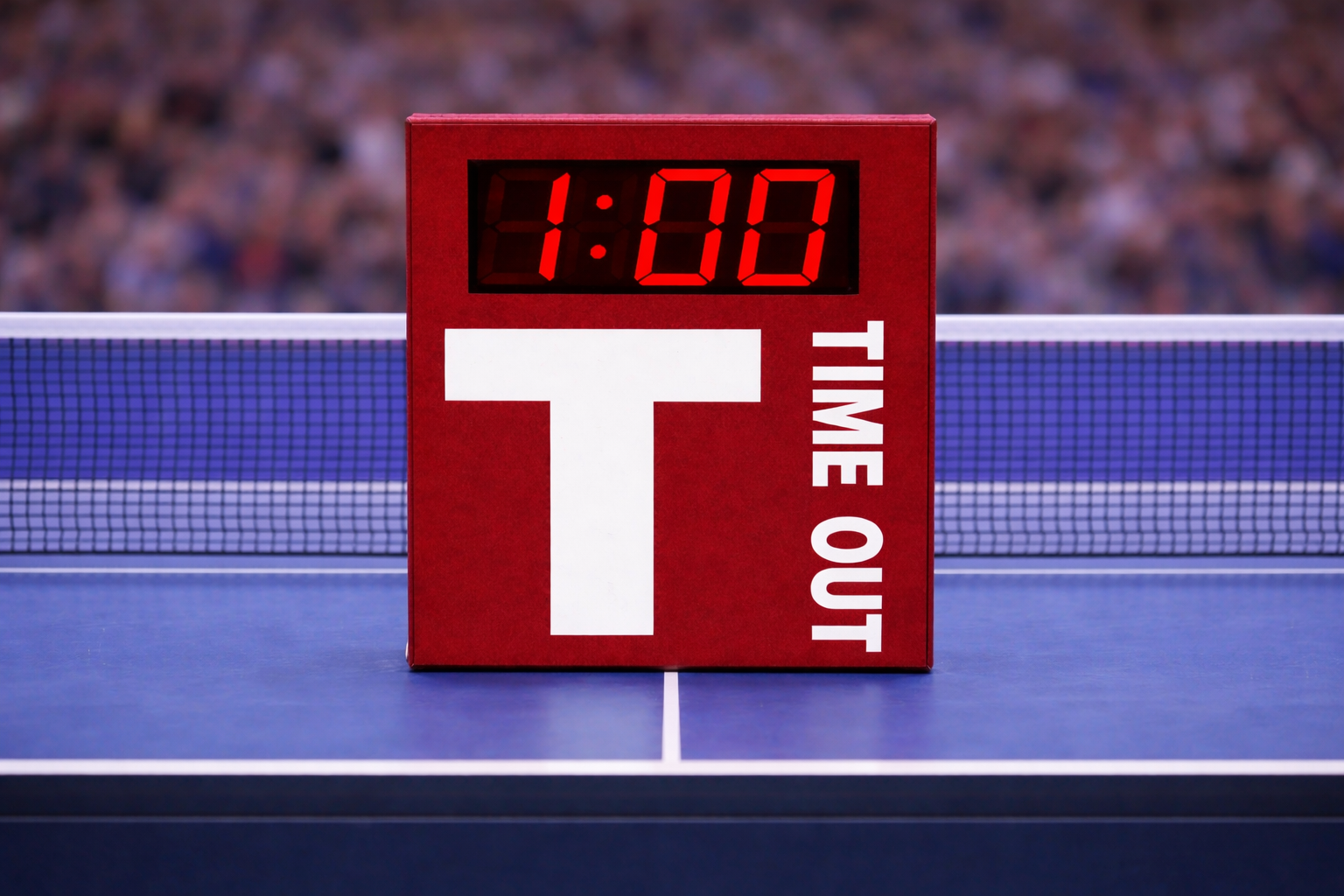
Timeouts are an important aspect of competitive table tennis, offering brief pauses that can influence match momentum, allow player recovery, and provide valuable coaching moments. Understanding the official table tennis timeout rules as defined by the International Table Tennis Federation (ITTF) and major tournament regulations is essential for players, coaches, and referees alike.
This comprehensive guide covers the definition, procedures, strategic uses, and common misconceptions regarding timeouts, helping you integrate timeouts effectively into matchplay and manage games within the regulatory framework.
What Are Timeouts in Table Tennis?
Definition and purpose of a timeout
A timeout in table tennis is an authorized break in play, granted to a player or team to rest, strategize, or resolve unforeseen issues. Timeouts help manage the physical and psychological demands of match play, allowing recovery from fatigue or injury, and enabling discussion of tactics with coaches.
Situations where timeouts are most commonly used
- When a coach needs to convey tactical adjustments or motivational support
- To disrupt an opponent’s momentum or rhythm, especially after a series of strong plays
- During physically demanding rallies or matches requiring brief recovery
- Addressing equipment issues, minor injuries, or external interruptions
Official Rules Governing Timeouts
Timeout duration and limits as per ITTF regulations
The ITTF specifies that a timeout should not exceed 1 minute in duration. This ensures matches proceed efficiently while still offering meaningful rest or strategic discussions. Any extensions beyond this typically require special permission from the referee.
Number of timeouts allowed per match and per game
Generally, only one timeout is permitted per player or team per match, regardless of the number of games. This applies equally to singles and doubles formats. Timeouts cannot be called multiple times consecutively or within the same game without explicit referee approval, maintaining fairness and game flow.
Who can request a timeout: player, coach, or umpire
Timeouts may be requested by the player or the coach. In some circumstances, an umpire or referee can grant a timeout for medical reasons or unforeseen disruption. Clear communication is required to ensure timely approval and to prevent unauthorized timeouts.
Procedures for Requesting and Granting Timeouts
How to properly signal a timeout during play
Players or coaches should indicate a timeout clearly to the umpire by raising a hand or using an agreed signal. Coaches typically call timeouts between points or at appropriate breaks. The umpire then acknowledges and officially suspends play for the timeout period.
Timing of timeout requests—when they can and cannot be called
Timeout requests are generally made at the end of a rally, before service or during intervals between games. Calling a timeout during active rallies is not allowed.
Role of the umpire and referee in timeout approvals
The umpire must verify the validity of the timeout request and ensure it fits within match rules and timing constraints. The referee oversees overall match conduct including timeout enforcement, handling disputes or exceptional cases, and sanctioning any violations related to timeout misuse.
Timeouts in Different Competition Formats
Differences between singles and doubles timeout rules
Timeout regulations remain consistent across singles and doubles formats, with the main distinction being that doubles teams share the one timeout allowance. In doubles, coaches frequently use timeouts for coordinated tactical instruction involving both players. For more details on doubles play, see our Comprehensive Guide to Table Tennis Doubles Rules for Players and Enthusiasts.
Timeout rules in domestic vs. international tournaments
While most domestic and international tournaments adopt ITTF timeout rules as standard, some domestic leagues may modify timeout duration or allowances. It is important to verify specific competition regulations ahead of participation.
Special rules for junior and para table tennis
Junior and para table tennis may have adapted timeout guidelines to accommodate additional recovery needs or disability considerations. For example, extra time or additional timeouts might be permitted for medical reasons. Consult the relevant governing body’s rules for exact provisions.
Strategic Use of Timeouts in Match Play
Using timeouts to disrupt opponent rhythm (e.g., during a strong topspin rally)
Strategic timeout calling can interrupt an opponent’s momentum at critical moments, such as after winning several points in a row. This psychological tactic forces a break in their flow, potentially lessening their aggression or confidence. To better understand topspin tactics, check out our Table Tennis Backhand Topspin Tutorial: Master the Essential Technique.
Adjusting tactics such as footwork or serve receive during timeout discussions
Timeouts provide opportunities for coaches to advise on specific tactical adjustments, including positioning improvements, serve receive patterns, or targeted shot selection. This can translate into in-match improvements and exploitation of opponent weaknesses.
Opportunity for psychological reset and brief physical recovery
Timeouts offer essential respite from physical exertion and mental fatigue, helping players regain composure and focus. A brief mental reset reduces reactive errors and supports sustained high performance through the match.
Common Misconceptions About Timeouts
Timeouts vs. Medical Timeouts and their differences
It is important to differentiate between standard match timeouts and medical timeouts. Medical timeouts are granted specifically for injury treatment and may have different duration limits and authorizations, often requiring referee approval. Regular timeouts are tactical or rest breaks with strict one-minute timeframes.
Myths regarding unlimited timeout calls
Contrary to some misconceptions, players and coaches cannot call unlimited timeouts. Only one timeout per match is typically allowed, preventing overuse as a disruptive tactic.
Clarifying consequences of unauthorized timeout requests
Requests for timeouts outside authorized conditions—such as during active rallies or exceeding time limits—can result in warnings, penalties, or loss of points depending on tournament rules. Strict adherence safeguards fairness.
Recommendations for Players and Coaches
Best practices for effectively integrating timeouts into match strategy
- Plan timeout requests strategically, using them at optimal moments to disrupt opponent momentum or refocus your player.
- Use timeouts to clarify tactical changes or reinforce key instructions with players.
- Avoid poorly timed timeouts that could disrupt your own player’s rhythm.
Advice on timeout etiquette and sportsmanship
Respect opponent timing and fairness by adhering strictly to timeout rules. Avoid using timeouts to delay play unnecessarily or for psychological gamesmanship beyond strategic intent. Displaying good sportsmanship enhances the spirit of the game and maintains positive match atmosphere.
Conclusion
- Understanding table tennis timeout rules is crucial for effective match management and strategy.
- Properly used timeouts offer competitive advantages without breaking rhythm.
- Players and coaches should familiarize themselves with the nuances of timeout protocols detailed by the ITTF and tournament organizers.
- Adhering to timeout etiquette promotes fair play and smooth tournament conduct.