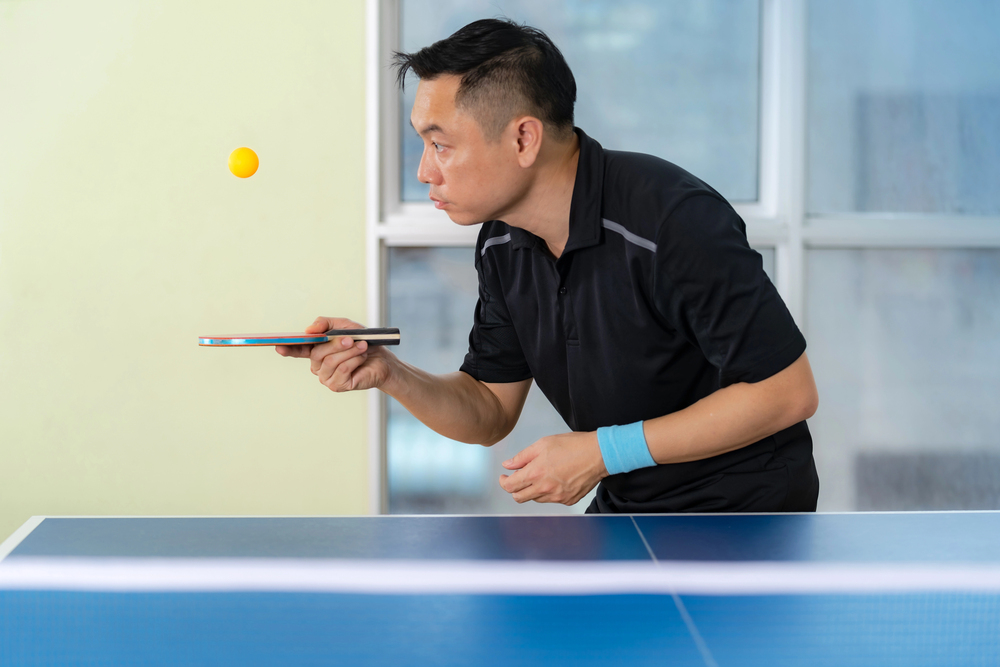
Training at home is a convenient way for table tennis players to develop core skills such as serve, receive, and footwork between club sessions. Focusing on technical drills like topspin loops, backhand counters, and short game can greatly enhance consistency and control. Proper use of table tennis equipment such as racket types, blade composition, and rubber choice impacts training effectiveness. This guide offers targeted exercises, practice routines, and tips to maximize your training time and overcome space or partner limitations.
Setting Up an Effective Home Training Space
Selecting the Right Table and Space Considerations
Choosing an appropriate table tennis table is essential for meaningful practice. Ensure the table suits your available space while adhering to regulation dimensions (2.74m length x 1.525m width). Adequate surrounding space is needed for effective footwork and movement drills. Consider foldable or compact tables if space is limited. Good table surface quality impacts ball bounce and dwell time, improving stroke feedback during training.
Recommended Equipment: Robots, Nets, and Practice Aids
A table tennis robot is a valuable investment for solo training, delivering consistent feeds with adjustable speed, spin, and placement. This facilitates advanced drills such as multiball drills without a partner. Additionally, ensure your net is regulation height and tension for realistic rally simulation. Simple aids like target markers and return boards help practice serve receive and shot placement.
Ensuring Proper Lighting and Flooring for Footwork
Good lighting ensures clear ball visibility and shadows that assist in tracking spin and trajectory. Avoid glare or direct sunlight that may impair vision. For footwork, choose non-slip flooring to prevent injuries and allow quick, dynamic movements. A surface with some shock absorption helps sustain intensive footwork drills.
Fundamental Technical Drills for Solo Practice
Improving Serve Accuracy and Variety from Home
Focus on maintaining legal serve mechanics with correct ball toss height and visibility. Practice different spins—topspin, backspin, and sidespin—by adjusting racket angle and wrist motion. Use targets on the opposite side of the table to improve placement precision. Self-recording helps identify technical inconsistencies.
Shadow Practice for Stroke Mechanics: Forehand and Backhand
Shadow drills involve mimicking stroke motions without a ball to refine form and muscle memory. Emphasize smooth weight transfer, timing of arm and wrist, and follow-through for both forehand and backhand strokes. This strengthens stroke foundation before full-contact practice.
Using Multiball Drills with a Robot or DIY Methods
Deploy a table tennis robot for repetitive stroke practice with varied placements and spins, ideal for refining strokes like backhand loops and controlled drives. Alternatively, use self-feed methods such as bouncing balls on the table or against a rebound board to simulate continuous rallies.
Enhancing Dwell Time and Contact Precision
Concentrate on racket angle and finger pressure to increase dwell time, where the ball stays momentarily on the racket surface for better spin control. Experiment with different sponge hardness layers and tensor rubber types to understand how equipment influences ball contact and shot outcome.
Mastering Spin and Stroke Control Indoors
Practicing Topspin Loops and Backhand Loops Solo
Use multiball drills or a robot to perform repetitive topspin drives and loops, focusing on brushing upward contact with controlled wrist snap. Maintain body posture and foot positioning to create consistent spin production. Record and review your strokes to identify areas for improvement. For more on spin techniques, see how to generate more spin in table tennis.
Controlling Throw Angle and Speed without a Partner
Adjust the robot’s ball feed angle and speed settings or use marked targets to vary throw angle. This helps practice adapting stroke timing and racket angle to different ball trajectories, mimicking match variability. Use slow to moderate speeds for technique building before increasing intensity.
Rust Removal Techniques for Rubber and Impact on Spin
Maintain your racket rubber by regularly cleaning to remove dust and rust that can degrade tackiness and spin potential. Use specialized rubber cleaners and protective films to prolong usability. Clean, well-maintained rubber enhances effective spin production during looping and serves.
Exercises for Reading and Adjusting Spin
Practice against the robot or self-feed to observe ball rotation visually and through ball trajectory changes. Use shadow strokes to simulate adjustments in racket angle and pressure for different spins. Developing spin-reading skills strengthens your serve receive and rally control. For detailed guidance, visit how to read spin in table tennis.
Footwork and Movement Drills at Home
Side-to-Side and In-and-Out Movement Exercises
Perform lateral shuffles along the table sides to simulate moving between forehand and backhand shots. Add forward and backward steps to handle depth variations during rallies. These drills improve agility and speed for positioning during quick exchanges.
Shadow Footwork Drills to Simulate Serve Receive Scenarios
Combine footwork with stroke shadow practice imitating serve receive. Move dynamically to expected ball landing spots, adjusting racket position for short and long serves. This builds muscle memory for rapid response and directional changes.
Improving Reaction Speed and Balance without a Table
Use cone or tape markers for foot placement drills focusing on explosive starts and balance recovery. Jump rope or plyometric drills specific to table tennis foot demands enhance reaction time and stability.
Incorporating Plyometrics Specific to Table Tennis
Plyometric movements such as lateral hops, bounding, and quick step crosses target the fast, multidirectional requirements of table tennis. These exercises complement technical footwork drills, boosting movement efficiency and endurance.
Serve and Receive Training Without a Partner
Serve Practice: Developing Spin, Placement, and Variations
Practice serves by targeting specific table areas with different spin types, using high-quality rackets with appropriate blade composition and rubbers like tensor rubber to optimize spin and speed. Analyze ball trajectory to refine consistency and disguise.
Improving Serve Receive Using Markers and Targets
Set targets on your side of the table to practice returning serves precisely. Combine with video analysis or mirror feedback to correct body positioning and stroke timing when receiving various spins.
Recording and Analyzing Serve and Receive for Self-Correction
Use smartphones or cameras to record sessions focusing on serve toss, contact, and receive strokes. Review footage to identify technical weaknesses and track improvement over time.
Using Virtual or Video Tools for Feedback
Virtual coaching apps or video analysis software can assist in providing frame-by-frame insights into stroke mechanics, spin awareness, and footwork cadence, enabling data-driven training refinements [needs source].
Routine Building and Progress Tracking for Home Training
Creating a Balanced Weekly Practice Schedule
Structure weekly sessions to address serves, strokes, spin control, and footwork in rotation. Include rest days to avoid fatigue and allow muscle recovery. Start modestly and increase training volume concentrically.
Tracking Improvements in Stroke Consistency and Speed
Maintain training logs noting repetition counts, success rates hitting targets, and speed measurements (if possible). Objective tracking helps sustain motivation and focus on progressive development.
Using Data and Technology to Monitor Progress [needs source]
Consider apps or devices that measure ball speed, spin rate, and shot placement for quantitative feedback. While still an emerging area, technology can supplement traditional coaching and self-assessment practices.
Maintaining Motivation and Setting Clear Goals
Set realistic short- and long-term goals related to technique or footwork milestones. Celebrate small improvements and vary drill types to keep training engaging. Mix challenge levels to avoid boredom or frustration.
Conclusion
- Regular, focused table tennis training at home can significantly improve your technical skills and footwork between club sessions.
- Incorporating a variety of drills focusing on serves, spin control, and movement helps maintain balance in your game development.
- Using appropriate equipment and setting up a dedicated practice area boosts efficiency and effectiveness.
- Tracking progress and maintaining motivation are crucial to consistent improvement during solo training.