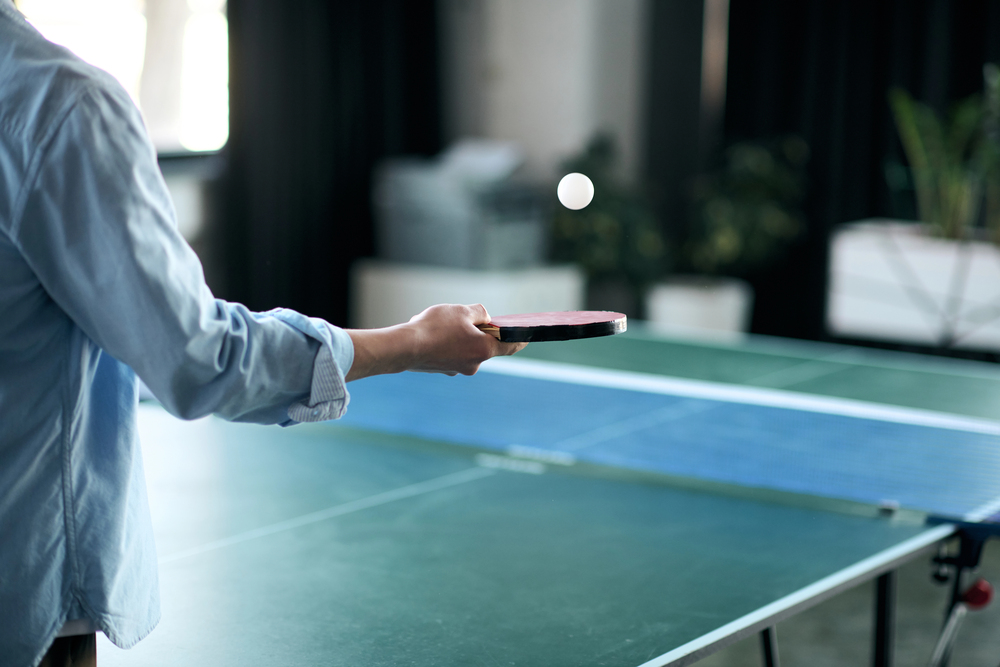
Understanding the Benefits of Solo Table Tennis Training
Why practice alone boosts technical consistency and muscle memory
Training alone in table tennis is a powerful way to refine your technical skills and build muscle memory. Without the variability introduced by different partners, you can focus deeply on repetitive movements, honing your stroke mechanics and shot placement consistently. Solo drills allow precise targeting of weaknesses, enabling systematic improvement in fundamentals like topspin generation, backhand loop technique, and controlling the dwell time of the ball on the racket.
The role of solo drills in refining serve and receive mechanics
Solo practice is particularly effective for perfecting your serve and receive game. By practicing serves with a focus on placement to marked zones and spin variation (topspin, backspin, and sidespin), you build accurate delivery skills. Similarly, using tools such as a robot or practicing simulated serve receive with rebound boards helps develop anticipation and response timing, even without a training partner.
Improving mental focus and shot anticipation even when practicing solo
Training alone fosters greater mental discipline and concentration. Without the immediate stimulus of an opponent’s shots, you engage actively with simulated scenarios, visualizing opponent shot types and rally patterns. This mental rehearsal sharpens your shot anticipation, decision-making, and adaptability in match situations.
Solo Warm-Up Drills to Prepare for Practice
Shadow swings focusing on forehand and backhand loops
Before hitting the ball, shadow swings are invaluable for warming up muscles and memorizing stroke sequences. Practice smooth forehand and backhand loop motions, emphasizing correct body rotation, wrist snap, and racket angle. Pay attention to your blade composition and how it influences racket feel during these movements.
Footwork ladder drills tailored for table tennis lateral and in-out movements
Footwork is core to effective play, and solo ladder drills develop quick lateral and in-and-out steps essential for coverage. Set up an agility ladder or mark a pattern on the floor and practice fast, controlled foot placement, simulating movement to the ball’s expected locations.
Blade handling and grip adjustment exercises to improve dwell time awareness
Improving awareness of grip tension and blade control enhances your ability to manage dwell time, a subtle yet important aspect of spin generation and stroke control. Use solo exercises to adjust grip pressure and experiment with different wrist angles and strokes to feel how long the ball contacts your blade, optimizing your technique.
Serve Practice Without a Partner
Using targets and marked zones on the table to perfect serve placement
Create visual targets or tape-marked zones on your opponent’s side of the table to practice precise serve placement. Aim short serves near the net and long serves deep to different corners, improving control. This practice enhances tactical serve variety and prepares you for effective rally initiation.
Varying spin types: topspin, backspin, sidespin serves – tips to master without feedback
Developing serve spin variation solo involves focusing on specific racket angles and wrist motions. To produce topspin, use faster upward brushing strokes; for backspin, brush downwards with an open racket face; and for sidespin, flick the wrist sideways subtly during contact. Concentrate on the throw angle and ball contact point, traits vital for disguising spin without immediate opponent feedback.
Tracking ball toss and throw angle in serving technique optimization
Maintain a consistent and high-quality ball toss by practicing a vertical throw with minimal lateral deviation, ensuring the ball is visible and legal per serve rules. Experiment with throwing angles while monitoring ball trajectory to optimize spin generation consistency and deception.
Receive and Return Simulations
Using ball machines or service robots to mimic opponent’s serves and shots
A ball machine or service robot is an excellent investment for solo practice, providing consistent, varied delivery replicating different spins and shot placements. Program it to alternate between topspin, backspin, and sidespin serves, as well as placement variations, to train reflexes, footwork, and stroke responses effectively.
Solo practice tips for developing effective receive strategies and quick footwork
When lacking a robot, use rebound boards or walls to simulate returns. Work on foot positioning, anticipation, and timing to refine your serve receive stance and stroke. Quick lateral steps combined with precise paddle control enable better adaptation to diverse receive scenarios.
Shadow receive drill: imagining opponent shot types and practicing defensive positioning
Engage in shadow receive drills by visualizing common serve placements and spin types. Move into defensive positions accordingly and mimic the appropriate stroke, practicing response rhythm and form without the ball. This mental-simulative method enhances readiness and anticipation.
Stroke Development and Consistency Drills
Targeting ball placements on the table using markers or tape to practice accuracy
Place markers on your side or opponent’s side of the table to practice hitting specific spots. Aim to consistently place forehand and backhand strokes—such as loops and counters—within these targeted zones to improve shot precision and court control.
Practicing topspin loops, backhand counters, and short game control via multi-ball drills
Using multi-ball feeding (robot or partner when available), work on executing repeated topspin loops with correct racket angle and follow-through. Focus also on backhand loop counters with timing and footwork alignment. Incorporate short game strokes like pushes and drops for well-rounded control.
Adjusting stroke rhythm and contact timing to improve blade-sponge interaction
Fine-tune your contact timing with the ball, coordinating stroke speed with sponge hardness and blade feel to maximize spin and shot effectiveness. Smooth, consistent contact amplifies the interaction between sponge hardness, rubber grip, and racket composition, aiding consistent performance.
Footwork and Movement Training Alone
Using cones or markers to simulate opponent placement and encourage dynamic positioning
Arrange cones mimicking common opponent shot placements on both lateral and in-and-out axes. Practice moving swiftly and landing balanced to each cone’s position, reinforcing agile footwork applicable in real rallies.
Drills to enhance lateral movement, quick stops, and explosive starts
Combine lateral shuffles, reactive stops, and explosive forward/backward bursts in your footwork routines. Drill starts from ready positions towards targets or cones, simulating in-match movements and improving transition speed during dynamic play.
Integrating stroke simulation with footwork patterns for coordinated play
Synchronize foot placement with stroke shadow swings, mimicking approaches to topspin loops or defensive blocks. This coordinated drill builds neuromuscular synergy alongside technical skill, promoting efficient movement and stroke execution during match play.
Using Training Equipment for Solo Practice
Benefits of ball machines and how to program them for varied shots
Ball machines offer invaluable service for solo training by supplying continuous and customizable feeds. Program sequences including varying spin, shot speed, and placement oscillations that challenge both your footwork and stroke mechanics, simulating realistic rally conditions.
Rebound boards and walls: effective feedback tools for stroke and footwork training
Rebound boards provide immediate feedback and encourage consistent stroke contact. They also promote quick recovery footwork as you respond to returned balls. Training with a solid rebound surface enhances timing precision and stroke accuracy.
Smart apps and video analysis for self-assessment and improvement tracking
Utilize coaching apps and slow-motion video capture to analyze stroke mechanics, serve toss, rhythmic footwork, and overall form. Reviewing your sessions can highlight flaws and track progress, bolstering self-awareness and motivation to improve.
Maintaining Motivation and Tracking Progress When Training Alone
Setting specific training goals tailored to solo practice
Define clear and measurable objectives such as improving serve placement accuracy, increasing footwork speed, or mastering a specific stroke like the backhand loop. Goals help maintain focus and align drills with tangible outcomes in solo training sessions.
Using video recording and slow-motion playback for technical review
Recording drills during solo sessions allows you to examine stroke execution critically. Slow-motion playback highlights subtle technical issues in racket angle, timing, and body positioning, enabling targeted corrections and refinement.
Creating a structured schedule to incorporate varied solo drills
Implement a weekly or daily plan allocating time for warming up, serve practice, receive simulations, stroke drills, and footwork exercises. Structured variety prevents monotony, encourages balanced skill development, and promotes consistent progress.
Conclusion
- Solo table tennis training without a partner offers invaluable opportunities to sharpen technical skills when partners aren’t available.
- Incorporating drills targeting serve accuracy, receive mechanics, stroke consistency, and footwork builds a comprehensive skill set.
- Leveraging training aids like ball machines and rebound boards enhances practice quality and mimics match conditions.
- Consistent, focused solo training should complement partner practice, forming the foundation for ongoing table tennis development.