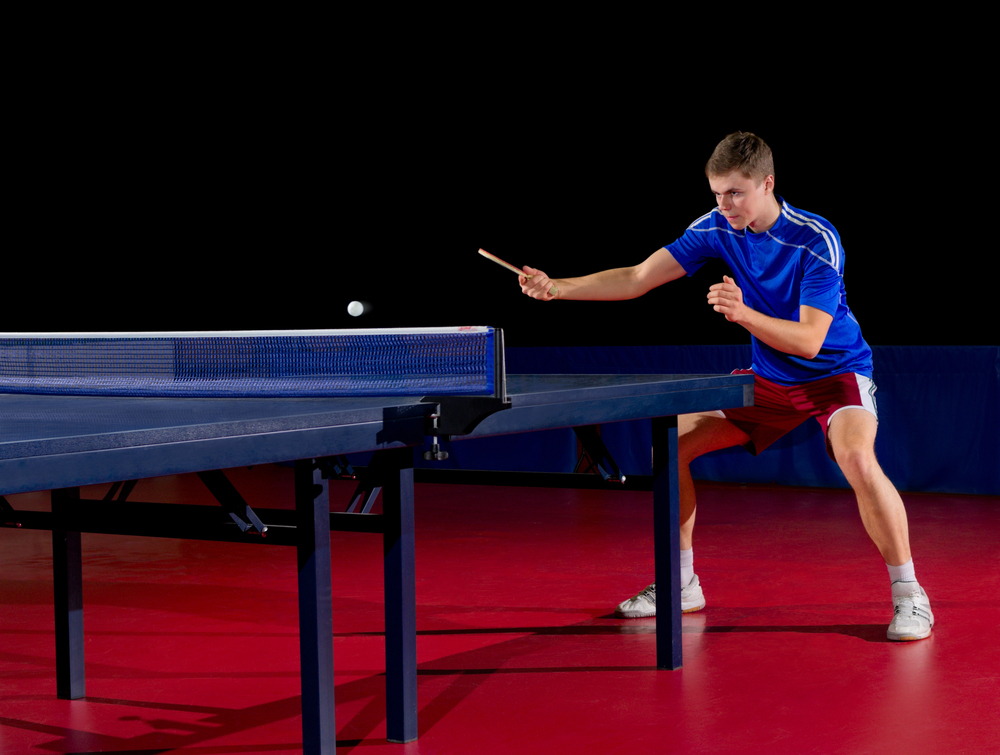
The backhand topspin stroke is a vital component for players aiming to add more offensive threat and dynamic counter-attacks to their game. This table tennis backhand topspin tutorial guides you through key technical aspects including grip, blade angle, stroke mechanics, and footwork needed to generate consistent spin and control. We also address common errors and drills that help refine your backhand loop and optimize in-match performance.
Mastering this stroke enhances your ability to attack and maintain pressure on your opponent, making it essential for players of all levels who seek to improve their backhand arsenal.
Understanding the Backhand Topspin Stroke
What is a Backhand Topspin?
The backhand topspin is an offensive stroke where the player imparts topspin on the ball using the backhand side of the racket. It typically involves a forward and upward brushing motion of the racket blade on the ball, causing it to dip sharply over the net and bounce dynamically on the opponent’s side.
This stroke differs from a backhand drive by generating more rotation through a longer contact time and upward swing path, making it more suitable for looping attacks.
Role of Backhand Topspin in Modern Table Tennis
In contemporary high-level play, the backhand topspin has evolved into a primary weapon for initiating attacks and counter-attacks. Its versatility allows players to:
- Open up rallies with aggressive loops from mid-distance.
- Counter strong forehand loops by redirecting pace and spin.
- Maintain offensive pressure in rapid transitions close to the table.
As players increasingly develop quick, powerful backhand topspins, it offers a tactical edge to diversify shot selection and destabilize opponents.
Basic Physics: Spin Generation and Ball Trajectory
Topspin results from the racket brushing the ball forward and upward, imparting rotational force. The amount of spin produced depends on:
- Dwell time: the duration the ball contacts the racket. Longer dwell time allows more friction and spin.
- Blade angle: a slightly closed blade angle helps direct the ball’s trajectory and maximize topspin.
- Throw angle: the racket’s angle at impact influences spin and ball arc.
The topspin causes the ball to arc higher over the net but drop sharply onto the table, increasing chances for aggressive yet controlled shots.
Equipment Setup for Optimal Backhand Topspin
Choosing the Right Blade Composition for Backhand Loops
Blade composition affects how energy transfers and the feel of the backhand topspin. Common choices include:
- All-wood blades: Provide good touch and control, suited for precise spin generation.
- Carbon or composite blades: Offer faster rebound speed, which can enhance spin and power but require refined timing.
A blade with a balanced flex and medium stiffness often benefits the backhand loop, allowing effective energy transfer without sacrificing control.
Rubber Selection: Tensor vs. Traditional and Sponge Hardness
Rubber characteristics are crucial for topspin performance. Tensor rubbers are popular for their enhanced elastic properties, which can increase ball dwell time and spin potential. When selecting rubber for the backhand:
- Tensor rubber: Typically provides more spin and speed due to its elastic sponge technology.
- Traditional rubber: May offer more predictable spin but less pop and speed.
- Sponge hardness: Softer sponges generally improve dwell time and spin but reduce the maximum speed, while harder sponges emphasize speed and control.
Choosing a medium-hard sponge tensor rubber for the backhand often strikes an ideal balance for generating effective topspin loops. For more details on rubber selection, see how often to change table tennis rubbers.
Handle Types and Grip Adjustments
Handle comfort supports consistent grip, which directly affects racket control and stroke precision. Common handle types include:
- Flared handle: Widest at the end, offering secure grip and stability for aggressive shots.
- Straight handle: Allows easier grip adjustments but requires more hand control.
- Anatomic handle: Shaped to fit the palm, providing comfort and control.
Adjusting your grip slightly towards the thumb and index finger can improve blade flexibility during the stroke, helping optimize spin generation without tightening the grip excessively.
Step-by-Step Backhand Topspin Technique
Correct Grip and Hand Positioning
The grip forms the foundation for an effective backhand topspin. Use a relaxed shakehand grip with the thumb resting lightly along the blade’s backside. This position allows:
- Better racket flexibility for brushing the ball.
- Control over the blade angle.
- Quick adjustments in stroke trajectory.
A grip that is too tight restricts blade movement and reduces spin potential. For more on grip types, see table tennis grip types.
Swing Path: From Backswing to Forward Acceleration
The backswing for the backhand loop typically dips slightly downward and backward, creating loading potential. The forward swing accelerates the blade upward and forward with a slightly curved path. Key points include:
- Start with a compact backswing to maintain balance and quick recovery.
- Generate acceleration mainly from the forearm and upper arm, coordinating with shoulder rotation.
- Use a smooth, brushing motion against the ball’s top half to create topspin.
Contact Point and Dwell Time Optimization
Aim to contact the ball slightly in front of the body at the highest comfortable point for control and spin. Increasing dwell time — the ball’s contact duration with the racket — is essential:
- Brush the ball from low to high, extending blade and finger flexibility.
- Maintain controlled pressure to maximize friction without slowing the stroke excessively.
Extending dwell time increases topspin generation and ball drop control.
Blade Angle and Throw Angle for Maximum Spin
The blade angle typically should be slightly closed (tilted forward about 10–20 degrees) to both generate topspin and direct the ball over the net. The throw angle at ball contact impacts the ball’s arc and spin amount. Adjusting the blade angle during the stroke helps:
- Increase spin by enhancing the upward brushing effect.
- Maintain control by controlling the ball’s flight trajectory.
Follow-Through and Recovery
After contact, the blade should continue to move upward and slightly forward, ensuring a smooth follow-through. Proper recovery involves:
- Returning to a neutral ready stance quickly.
- Preparing for the opponent’s return with balanced foot positioning.
Efficient follow-through and recovery are critical for maintaining consistency during extended rallies.
Footwork and Body Mechanics to Support the Backhand Topspin
Stance and Balance for Stability
Maintain a shoulder-width stance with knees slightly bent and weight evenly distributed. Stability ensures the body can deliver controlled power without unnecessary movement. A balanced stance aids in:
- Generating power from the legs and core.
- Improving stroke timing and precision.
- Quick recovery after the stroke.
For drills and tips on improving this aspect, see improve your table tennis footwork.
Weight Transfer and Rotation of the Upper Body
Effective backhand looping involves transferring weight from the back foot to the front foot during the stroke while engaging your torso rotation:
- The pelvis and shoulders rotate towards the playing side, amplifying racket speed.
- Coordinated weight shift adds momentum, improving spin and ball speed.
Proper body mechanics reduce arm fatigue and improve stroke fluidity.
Positioning for Effective Serve Receive and Rally Transitions
Good footwork ensures ready positioning for backhand topspin opportunities in these scenarios:
- Serve receive: Position yourself optimally to attack or block serves with the backhand loop.
- Rally transitions: Move swiftly to cover wide angles and prepare early for your backhand loop when the ball is played to your backhand side.
Anticipation and agility combined with precise footwork enable more aggressive and consistent backhand attacks.
Common Mistakes and How to Avoid Them
Too Tight a Grip Limiting Blade Flexibility
Over gripping reduces the natural blade flex and finger control needed to create maximum spin. Relax your hand slightly to enhance blade flexibility.
Overuse of Wrist vs. Arm for Spin Generation
Relying primarily on wrist flicks can cause inconsistent stroke timing and weaker spin. Instead, use coordinated arm and forearm movement combined with wrist flexibility.
Poor Timing Leading to Mistimed Contact
Striking the ball too early or late decreases spin and control. Practice timing so the contact consistently occurs slightly in front of your body at the optimal height.
Insufficient Forward Momentum Resulting in Weak Spin
Lack of proper weight transfer and body rotation often leads to weak and flat shots. Focus on transferring your body weight forward into the stroke.
Drills to Practice and Improve Your Backhand Topspin
Shadow Swing Drills to Perfect Technique
Practice the full backhand topspin stroke without the ball focusing on smooth swing path, blade angle, and follow-through. This builds muscle memory and stroke mechanics.
Multi-ball Training for Consistency and Speed
Using multi-ball sessions, you can repetitively loop backhand topspin against varying ball speeds and placements. This helps:
- Develop consistency in contact point and spin generation.
- Improve reaction time and stroke rhythm.
Robot or Partner Drills Focused on Backhand Loop
Practice receiving feeds targeted to your backhand side to simulate realistic match conditions. Control the ball’s placement and vary the spin to adapt your stroke. Using a table tennis robot can enhance this training.
Combining Backhand Topspin with Serve Receive Routines
Incorporate the backhand loop into serve receive drills, emphasizing early racket preparation and consistent footwork to attack short and long serves.
In-Match Strategies Using the Backhand Topspin
When to Use Backhand Topspin in Offensive Play
Initiate your backhand topspin when:
- The ball is placed mid-table or slightly short on your backhand side.
- You want to apply pressure by forcing errors with spin variations and speed.
Counter-Attacking Opponent Loops
Use your backhand topspin to counter strong incoming loops by adjusting racket angle and timing to maintain ball control and redirect pace effectively.
Short Game and Variation with Backhand Spin
Mix your backhand topspin with shorter, softer blocks or pushes to disrupt opponent timing and create openings.
Conclusion
Mastering the backhand topspin significantly enhances offensive versatility in table tennis. Consistent practice focused on technique, footwork, and timing is key to improvement. Selecting appropriate equipment such as blade composition and tensor rubber can complement your stroke mechanics for better spin and control. Incorporate varied drills and match strategies to effectively use the backhand topspin during competition, solidifying it as a dependable and dynamic weapon in your playing arsenal.